11 gen AI use cases in automotive industry
JAN. 28, 2025
9 Min Read
Generative artificial intelligence (gen AI) reshapes the automotive industry with applications that enhance efficiency and create measurable business impact.
Generative artificial intelligence is helping automakers cut costs, improve vehicle quality, and deliver better driver experiences across design, production, and post-sale service. AI supports practical gains across the vehicle lifecycle, from predictive maintenance and virtual testing to battery diagnostics and in-car assistants.
Key takeaways
- 1. Generative AI enables automakers to streamline processes and scale innovations through tools like predictive maintenance, virtual assistants, and advanced design platforms.
- 2. AI optimizes manufacturing with defect detection, virtual testing, and supply chain management, saving time and reducing costs.
- 3. Electric and autonomous vehicles benefit from AI advancements in battery management systems and real-time navigation capabilities.
- 4. AI-powered customer experiences improve user satisfaction and brand loyalty, including virtual showrooms and personalized in-car settings.
- 5. Partnerships with AI technology providers accelerate implementation timelines and provide access to advanced tools, enabling automakers to remain competitive.
How AI supports the automotive industry
Artificial intelligence helps automotive companies improve how vehicles are designed, built, sold, and supported. It gives automakers practical ways to reduce production costs, improve operational efficiency, and deliver customer-focused solutions.
The collaboration between Cerence and NVIDIA demonstrates how AI integrations accelerate innovation in the automotive sector. Leveraging NVIDIA’s advanced processing technology within Cerence’s platform allows this partnership to introduce cutting-edge in-car experiences that respond dynamically to user preferences. These advancements highlight the role of AI in reducing time-to-market and creating scalable solutions that enhance customer satisfaction.
AI applications touch every phase of the automotive lifecycle, from concept and design to production and post-sale services. Predictive analytics optimize vehicle maintenance schedules, while AI-powered platforms enhance in-car personalization and infotainment. These technologies offer measurable benefits, including cost reductions, improved efficiency, and long-term value for manufacturers and end-users. AI is not only elevating industry standards but also unlocking opportunities for automakers to deliver smarter, safer, and more adaptable vehicles.
"AI is reshaping how the automotive industry develops, manufactures, and delivers vehicles."
11 gen AI use cases in the automotive industry
Generative AI supports automotive teams across operations, design, testing, sales, and customer experience. The use cases below show where it creates clear business value and where leadership teams can focus for faster time-to-value.
| Use cases | Primary business value |
|---|---|
| Predictive maintenance in vehicles | Lower downtime and repair costs |
| AI-powered virtual assistants | Better driver experience and accessibility |
| Generative design for car prototypes | Faster design cycles and lower material waste |
| Virtual showrooms for immersive experiences | Stronger digital sales experience |
| AI-enhanced quality control | Higher production accuracy |
| Personalized in-car settings | Greater driver comfort and loyalty |
| Supply chain optimization with AI | Lower inventory risk and better planning |
| AI-led marketing strategies | Higher campaign efficiency |
| Virtual testing and simulation tools | Lower prototype costs and shorter testing cycles |
| Battery management systems for EVs | Longer battery life and better reliability |
| Autonomous driving advancements | Better real-time vehicle response |
1. Predictive maintenance in vehicles

Predictive maintenance helps automakers and fleet operators identify issues before they turn into failures. It uses sensor data and historical patterns to improve service timing and reduce costly disruptions.
Predictive systems create value by leveraging machine learning models that predict when a part may fail based on usage patterns and historical data. Fleet operators benefit by extending vehicle lifespans and avoiding unexpected interruptions. These tools also allow manufacturers to refine maintenance schedules and enhance customer satisfaction.
2. AI-powered virtual assistants
AI-powered virtual assistants make in-car interactions easier by helping drivers control core systems with natural language. They improve convenience, accessibility, and personalization across connected vehicle experiences.
AI-powered virtual assistants offer multilingual support and adaptability, improving accessibility for global users. They also integrate with connected ecosystems, enabling real-time updates on traffic, weather, and vehicle diagnostics. This personalization fosters convenience and builds stronger brand loyalty.
3. Generative design for car prototypes

Generative design helps engineering teams test more design options in less time. It improves component performance while reducing waste, development time, and prototyping costs.
Generative design accelerates prototyping, reduces material waste, and quickly lowers costs by identifying innovative solutions. This capability empowers manufacturers to experiment with cutting-edge concepts while meeting stringent industry regulations.
4. Virtual showrooms for immersive experiences
Virtual showrooms help automakers reach buyers online with more interactive product experiences. They support customization, reduce dealership overhead, and make the purchase journey more efficient.
Virtual showrooms expand market reach by enabling online customer engagement. They reduce overhead costs for dealerships and provide potential buyers with a personalized experience, making the car selection process more engaging and efficient.
5. AI-enhanced quality control
AI-enhanced quality control improves manufacturing accuracy by identifying defects early. This helps reduce waste, avoid recalls, and protect product quality at scale.
Automated quality control improves production accuracy and reduces waste by catching errors early. Manufacturers benefit from enhanced efficiency, higher-quality products, and fewer recalls, bolsters customer trust and brand reputation.
6. Personalized in-car settings
Personalized in-car settings improve driver comfort by adjusting vehicle features to match individual preferences. They also give automakers useful insight into how customers use their vehicles.
Personalized in-car settings improve convenience and comfort for drivers and passengers. These features also offer valuable insights into user behavior, helping manufacturers refine future designs and customer services.
7. Supply chain optimization with AI
AI helps automotive supply chains run with better forecasting, lower inventory risk, and stronger logistics planning. This supports production targets and improves cost control.
Manufacturers using AI for supply chain management benefit from reduced operational inefficiencies increased scalability, and better cost management. This approach strengthens their ability to meet production targets and customer expectations consistently.
8. AI-led marketing strategies
AI-led marketing helps automotive brands target the right audiences with more relevant campaigns. It improves conversion rates and gives teams clearer feedback on marketing performance.
This targeted approach improves customer engagement and conversion rates, leading to higher returns on marketing investments. Automakers can also use AI to assess campaign performance and refine strategies for greater effectiveness.
9. Virtual testing and simulation tools
Virtual testing allows automotive teams to assess vehicle performance earlier in development. It lowers prototype costs, speeds up validation, and reduces resource use.
Identifying design flaws early in the development cycle enables manufacturers to produce better vehicles faster. Virtual simulations also align with sustainability goals by minimizing resource consumption during testing.
10. Battery management systems for EVs
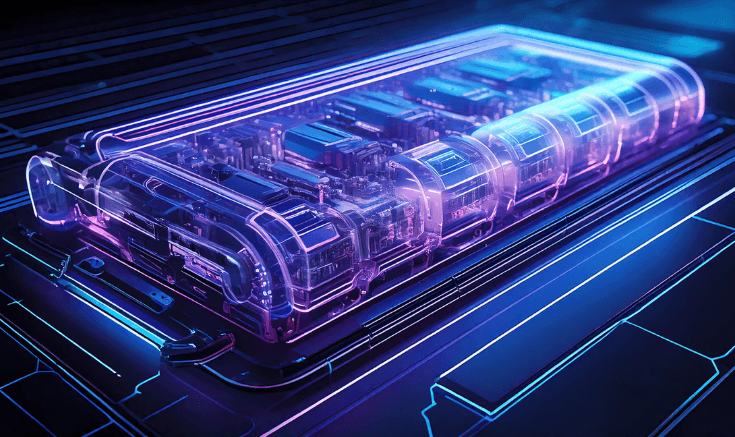
AI improves EV battery management by helping teams monitor battery health, optimize charging, and detect issues earlier. This leads to better reliability and longer battery life.
These advancements contribute to cost savings for EV owners and make electric vehicles more practical and reliable. Automakers also gain insights into battery performance, supporting their efforts to innovate and refine EV technologies.
11. Autonomous driving advancements
Autonomous driving systems rely on AI to interpret road conditions and respond in real time. This improves safety performance and supports the long-term development of automated mobility.
Advances in autonomous driving improve road safety and reduce accidents caused by human error. These systems also pave the way for fully automated transportation, offering scalable solutions for urban mobility challenges.
"From streamlining manufacturing processes to personalizing in-car experiences, gen AI enables automakers to redefine efficiency, safety, and engagement at scale."
Which automotive companies are using gen AI
Leading automotive companies are using gen AI to improve vehicle systems, production workflows, customer experience, and R&D. Their use cases show how AI can support measurable gains across safety, efficiency, and time-to-market.
Leading automotive companies leverage generative AI to create innovative solutions that enhance production, design, and customer engagement. These organizations demonstrate how adopting AI technologies results in measurable business impacts and competitive advantages.
- Tesla: Renowned for its advancements in autonomous driving, Tesla uses AI to enhance its Full Self-Driving (FSD) capabilities. Its neural networks analyze real-time data to improve vehicle safety and navigation accuracy.
- General Motors (GM): Through its AI-powered platform, GM integrates predictive analytics to optimize vehicle diagnostics, maintenance schedules, and production planning. GM’s focus on autonomous vehicles also relies on generative AI for simulation and testing.
- Ford: The company uses AI-led quality control systems to streamline manufacturing and detect defects. Ford also leverages AI in its marketing strategies, targeting customers with personalized vehicle recommendations.
- BMW: BMW employs generative AI to design vehicle prototypes and enhance production workflows. The company’s AI-based personal assistant, included in its vehicles, offers advanced voice recognition and personalized in-car experiences.
- Toyota: Toyota uses AI to optimize supply chain operations and enhance sustainability efforts. The company also integrates AI into its safety systems, improving accident prevention with real-time monitoring.
- Mercedes-Benz: With a focus on luxury and performance, Mercedes-Benz uses AI to provide personalized in-car settings and advanced driver assistance systems. AI is also a critical component of its vehicle testing and simulation processes.
- Volkswagen: Volkswagen adopts AI for predictive maintenance, enhancing vehicle reliability and customer satisfaction. AI applications extend to its autonomous driving research and sustainable production initiatives.
These companies illustrate how AI can unlock untapped potential in the automotive industry, offering improved operational efficiency, customer satisfaction, and faster time-to-market for innovative solutions. Each use case demonstrates the versatility and scalability of AI in addressing critical industry challenges.
How to implement generative AI in automotive operations

Generative AI implementation works best when automakers focus on specific business problems, strong data quality, scalable infrastructure, and clear success metrics. A structured rollout helps teams reduce risk and reach value faster.
Targeting key opportunities for automation and optimization
Successful implementation begins with identifying high-impact processes that benefit from AI automation and optimization. Predictive maintenance, vehicle design, and supply chain logistics often present substantial opportunities. AI-powered virtual testing tools, for instance, enable manufacturers to refine designs without the expense of physical prototypes. These tools reduce costs and accelerate time-to-market, offering measurable benefits for production efficiency.
Establishing the infrastructure for scalable AI solutions
Integrating AI requires a robust digital infrastructure to manage large datasets and high processing demands. Cloud platforms and edge computing solutions offer the scalability needed to support applications such as autonomous driving and personalized in-car systems. A structured approach to integrating these technologies reduces downtime and simplifies governance across operations.
Using high-quality data to train models
The accuracy of generative AI depends on data quality. Automotive companies must collect and process data from sources such as sensors, connected devices, and customer interactions. Clean, well-organized datasets enable AI to generate more accurate predictions and outputs. For example, enhanced data quality supports smarter battery management systems, improving the reliability of electric vehicles while extending battery life.
Leveraging collaborations to accelerate adoption
Partnerships with leading AI providers enhance implementation by offering access to advanced tools and domain expertise. Collaborations like Cerence’s work with NVIDIA demonstrate the value of combining expertise to create scalable AI-powered solutions. These alliances allow automakers to deploy advanced technologies efficiently while reducing internal resource requirements.
Measuring outcomes and refining systems
Regular evaluation of AI implementations ensures alignment with business goals. Metrics such as production efficiency, cost savings, and customer satisfaction provide clear benchmarks for success. Iterative improvements based on real-time performance data allow companies to refine AI systems, delivering more substantial results.
Generative AI offers practical, scalable solutions for automotive companies seeking to improve operations and meet evolving market demands. With a focus on measurable outcomes, robust infrastructure, and targeted collaborations, automakers can unlock the full potential of AI across their business processes.
How gen AI is shaping automotive priorities

Gen AI is helping automakers improve design, production, EV performance, and driver experience with clearer operational value. It supports safer vehicles, better service models, and more efficient product development.
AI technologies are also central to the advancement of electric and autonomous vehicles. Improved battery management systems extend battery life and reduce operational costs for electric vehicles. In autonomous systems, AI provides real-time processing and enhanced safety features, positioning automakers to meet the increasing demand for more imaginative mobility solutions. These applications offer practical benefits that address market opportunities and long-term business objectives.
Generative AI applications enable automotive companies to adopt future-ready strategies prioritizing measurable business impact and operational scalability. Integrating these tools helps manufacturers create value across the vehicle lifecycle, delivering smarter, safer, and more adaptable vehicles to their customers.
Generative AI redefines automotive possibilities through more intelligent, faster, and more efficient processes. Transforming design, production, and customer engagement allows these technologies to empower manufacturers to focus on delivering measurable results. At Lumenalta®, we specialize in building tailored AI solutions that align with your business goals, helping you create scalable innovations and achieve impact. Let’s build a brighter future together.
table-of-contents
- How AI supports the automotive industry
- 11 gen AI use cases in the automotive industry
- 1. Predictive maintenance in vehicles
- 2. AI-powered virtual assistants
- 3. Generative design for car prototypes
- 4. Virtual showrooms for immersive experiences
- 5. AI-enhanced quality control
- 6. Personalized in-car settings
- 7. Supply chain optimization with AI
- 8. AI-led marketing strategies
- 9. Virtual testing and simulation tools
- 10. Battery management systems for EVs
- 11. Autonomous driving advancements
- Which automotive companies are using gen AI
- How to implement generative AI in automotive operations
- How gen AI is shaping automotive priorities
- Common questions about gen AI use cases in the automotive industry
Common questions about gen AI use cases in the automotive industry
How is generative AI used in automotive design?
What role does AI play in predictive maintenance for vehicles?
Can generative AI improve customer engagement in the automotive industry?
How do AI-powered virtual assistants benefit automakers?
What measurable benefits does AI provide in vehicle manufacturing?
Want to learn how artificial intelligence can bring more transparency and trust to your operations?