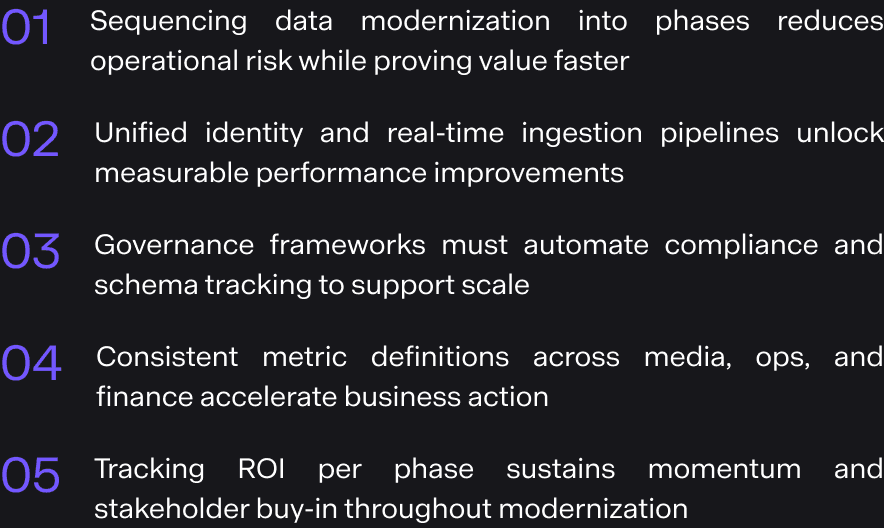
Key takeaways
Identify where fragmented data pipelines, identity gaps, and vendor silos slow performance
Tool sprawl leaves ad ops drowning in incompatibilities. Large enterprises now juggle an average of
664 separate applications, many of them pushing or pulling campaign data without shared standards. Each hand‑off introduces new formats, timing drifts, and ID rewrites that erode attribution. Performance slows because data arrives late or is mismatched.
Begin with a forensic map of every ingestion path. Mark where CSV exports run overnight, APIs throttle at peak load, and identity keys change without notice. These pivot points create blind spots that block optimization, hide spend leakage, and highlight redundant exports that drive storage costs without adding insight. Remediation starts with one canonical identifier and a rule that no downstream system overwrites it.
When pipelines share a single identifier and common schedule, latency drops immediately. Analysts shift from detective work to insight generation. Incidents labeled “missing clicks” fade as tables reconcile on the first query. The organization gains a reliable base for the improvements that follow.
Link modernization to media performance, attribution accuracy, and team efficiency
Disconnected metrics translate directly into wasted budget. Forrester calculated that 56 % of display ad dollars disappeared into fraudulent or unviewable inventory, costing
$7.4 billion in a single year. That loss occurs because placement cost, creative exposure, and verified impressions rarely meet in the same dataset. Linking modernization projects to performance metrics keeps every stakeholder focused on revenue, not plumbing.
A unified log‑level store raises the quality of each metric. Automated rules pause weak supply paths as soon as real‑time analytics flags growing waste. Shared lineage frees analysts from spreadsheet merges, letting them test creative hypotheses mid‑flight. Attribution models sharpen because timestamps and IDs finally align. Integrated health checks surface upstream feed failures before impression loss snowballs across channels.
Teams move from reactive correction to proactive optimization. Shorter feedback loops surface winners within one flight, not after budgets burn. Finance gains prove that spending meets business targets. Confidence rises across media, analytics, and leadership.
Prioritize early wins: sequence your roadmap to reduce latency and unify spend data
Sequencing keeps modernization fast and safe. Tackling everything at once shocks production systems and drains goodwill. Phased milestones allow quick wins that finance notices and operators trust.
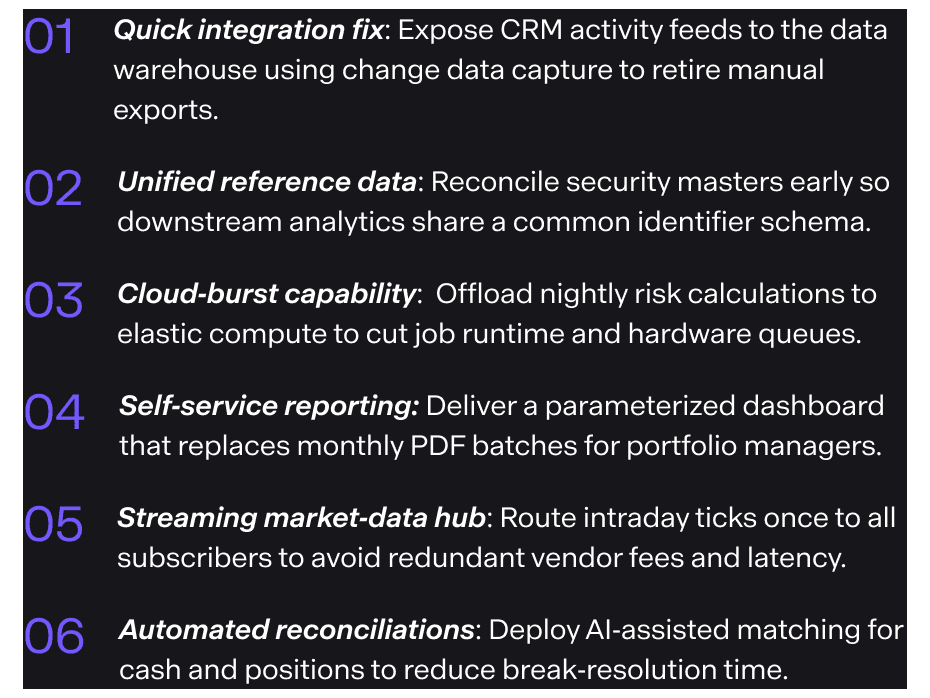
This cadence shows value inside the first sprint. Each milestone funds the next through lower fees or higher revenue. Stakeholders see progress instead of disruption. Momentum builds toward deeper modernization without risking live campaigns.
Build a foundation for identity, campaign data, and real‑time analytics integration
Latency budgets set the ceiling on auction success. Mission‑critical advertising workloads require operational data within one to two seconds, while near real‑time analytics targets sit under
15 minutes. Architectures must respect those windows from day one. Event streams, columnar stores, and schema‑evolution pipelines answer the call.
A durable identity spine anchors the system. Hash‑based keys join cookies, devices, and clean‑room tokens without constant re‑mapping. Campaign metadata rides the same rails, keeping cost and creative aligned with audience segments. Continuous analytics engines calculate lift and feed bid modifiers in near real time. Open metadata APIs expose lineage to partner clean rooms without slowing clearance reviews and uptime.
Integration becomes effortless because every system references the same clock and key. Frequency caps extend across screens. Dynamic creative swaps adjust to attention metrics while a campaign is still live. Architecture shifts from obstacle to accelerator.
Need a tactical view? Access our tactical playbook for data modernization in ad tech.
Apply governance that supports privacy compliance and reduces audit friction
Velocity without governance invites fines. Gartner pegged annual losses from poor data quality at
$12.9 million per organization. Privacy audits grow tougher as IDs decline and clean rooms proliferate. Governance frameworks stop risk before it appears in headlines.
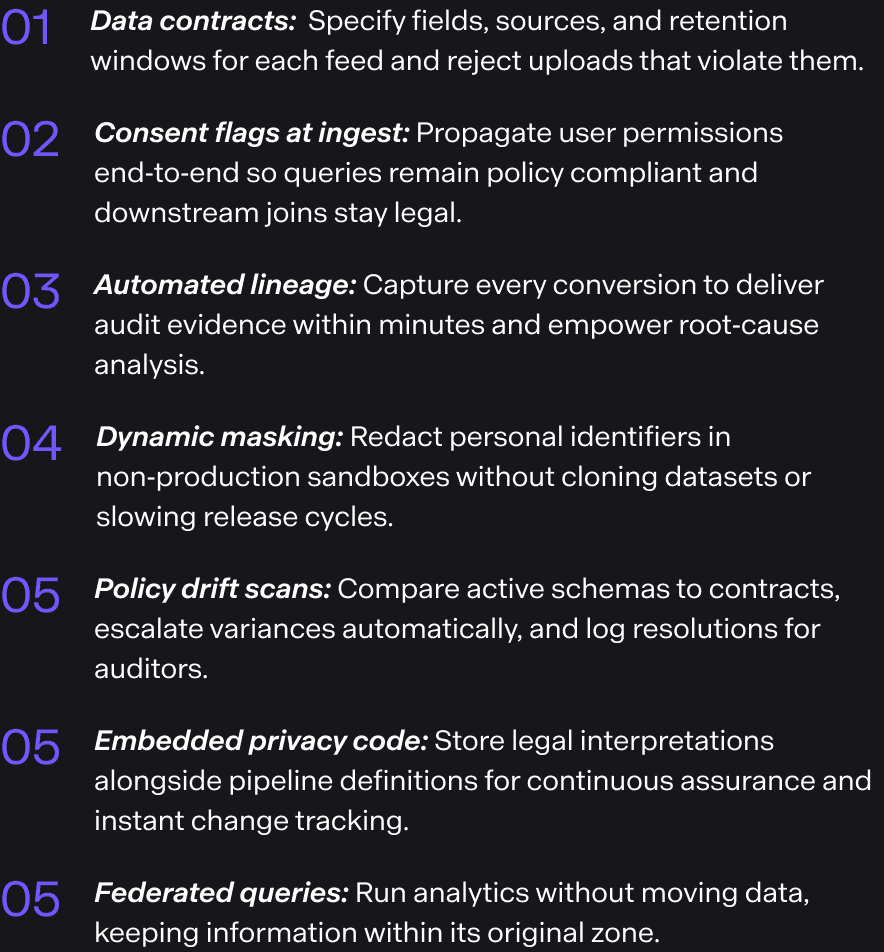
Automated controls trade manual review cycles for instant assurance. Auditors retrieve evidence in minutes, not weeks. Engineers ship features without fearing compliance rollbacks. Risk shrinks as innovation speeds up.
Standardize campaign and audience metrics to increase trust and speed decision‑making
Numbers only drive action if everyone trusts them. Fewer than
15 % of organizations connect governance programs to clear business outcomes. Metric drift erodes credibility faster than any outage. Standardization restores faith and accelerates decision speed.
Build a catalog that defines numerator, denominator, source, and freshness for each KPI. Encode those rules in semantic layers and query templates so definitions cannot drift. Retire rogue calculations living in spreadsheets before they poison forecasts. Version metrics like code, complete with review and change logs. Automated alerts flag any metric that drifts beyond tolerance, stopping data at the source.
Finance, product, and media reference the same figures. Debate shifts from data quality to strategic next steps. Performance meetings end with actions, not reconciliations. Trust multiplies every other modernization gain.
Track ROI at every phase to maintain stakeholder confidence and scale impact
Modernization survives budget cycles when ROI is visible. Tracking must start at phase one and expand with each release. Balanced scorecards mix speed, cost efficiency, and revenue lift. Clear numbers persuade skeptics and rally champions.
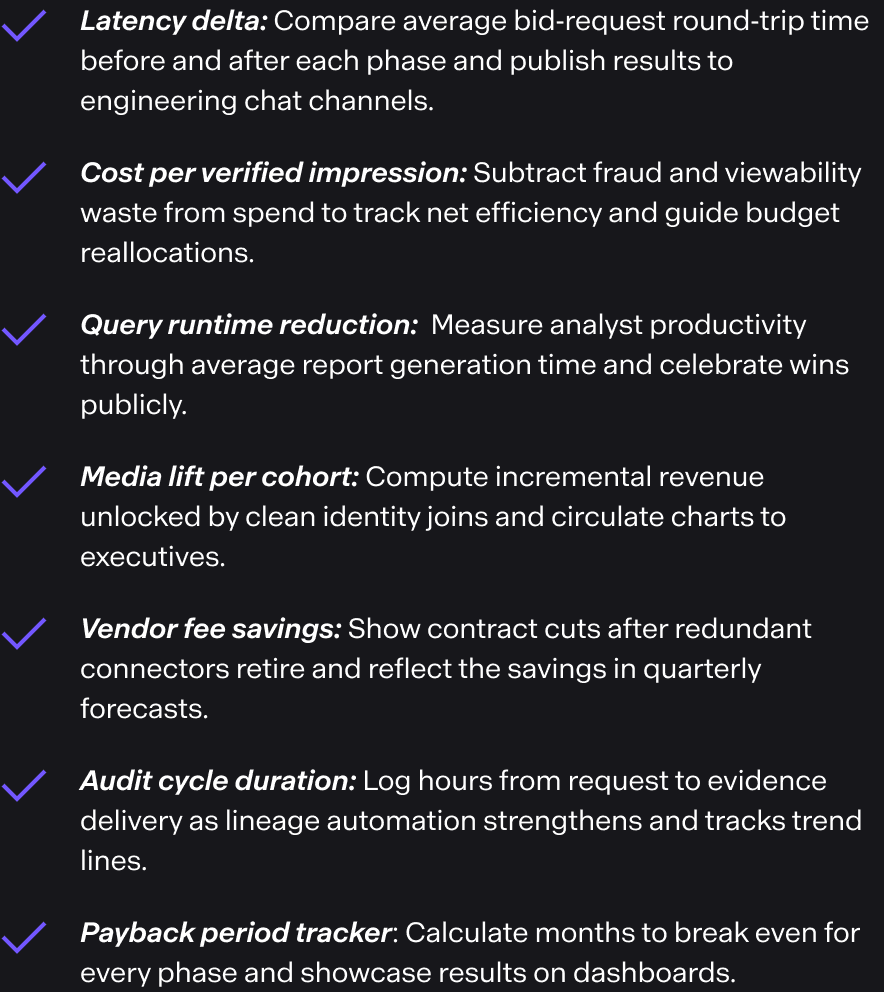
Regular reporting keeps momentum strong. Wins compound because savings and lift finance the next sprint. Stakeholder confidence holds even when priorities compete. The roadmap stays on track from prototype to full scale.
How Lumenalta®helps ad tech CIOs modernize data without breaking what already works
Those ROI dashboards naturally spark questions about who can execute the plan without disrupting auctions. Our phased engagement model mirrors the roadmap, beginning with ingestion refits and identity alignment before stepping into analytics and governance. Engineers co‑create inside existing toolchains, protecting live campaigns while upgrading pipelines. Weekly evidence (shorter bid times, smaller reconciliation files, and lower vendor fees) keeps executives confident.
Lumenalta® provides the co‑creation approach that turns strategy into shipped code.
Pragmatism guides every deliverable. Cost controls sit in each phase, pipelines scale by volume, and ownership transfers through runbooks. Senior IT leaders gain a schedule they can defend in the boardroom. Operators gain tooling that simplifies their day and reduces incident tickets. Business leaders gain a modernization path that accelerates performance without raising risk.