
Scale with data precision
The tactical playbook insurance CIOs need to reduce manual risk and improve reporting

Key execution findings
Legacy insurance systems drain 70–80 % of IT budgets—just to stay alive. Every swivel-chair handoff, late filing, and re-keyed claim slows growth while regulators tighten oversight. Full replatforming is unnecessary and risky; a phased modernization path delivers faster returns. This tactical playbook shows how to connect modernization milestones directly to KPIs like quote accuracy, fraud detection speed, and claims cycle time. The result is cleaner data, faster reporting, and restored confidence from finance, regulators, and customers alike.
70–80%
of insurance IT budgets still fund legacy maintenance.*
68%
of insurers plan to raise modernization spending this year.*
308B USD
lost annually to insurance fraud that faster detection could reduce.*
2.8T USD
projected global digital transformation investment by 2025.*
AUG. 14, 2025
3 Min Read
This playbook offers a phased roadmap that links each technical move to measurable business outcomes. Each phase delivers visible ROI: shorter cycle times, higher data trust, and fewer manual touchpoints. The result is a modern foundation that supports automation, real-time analytics, and faster regulatory response—without disrupting core policy or claims systems.
Why modernization matters now
Legacy systems consume most insurance IT spend, leaving little room for innovation. Every manual claim, late report, and policy re-entry drains resources and heightens audit exposure. Modernization isn’t about replatforming—it’s about reclaiming time, trust, and transparency. This playbook helps CIOs cut manual risk and rebuild credibility with regulators and boards.
How to execute without disruption
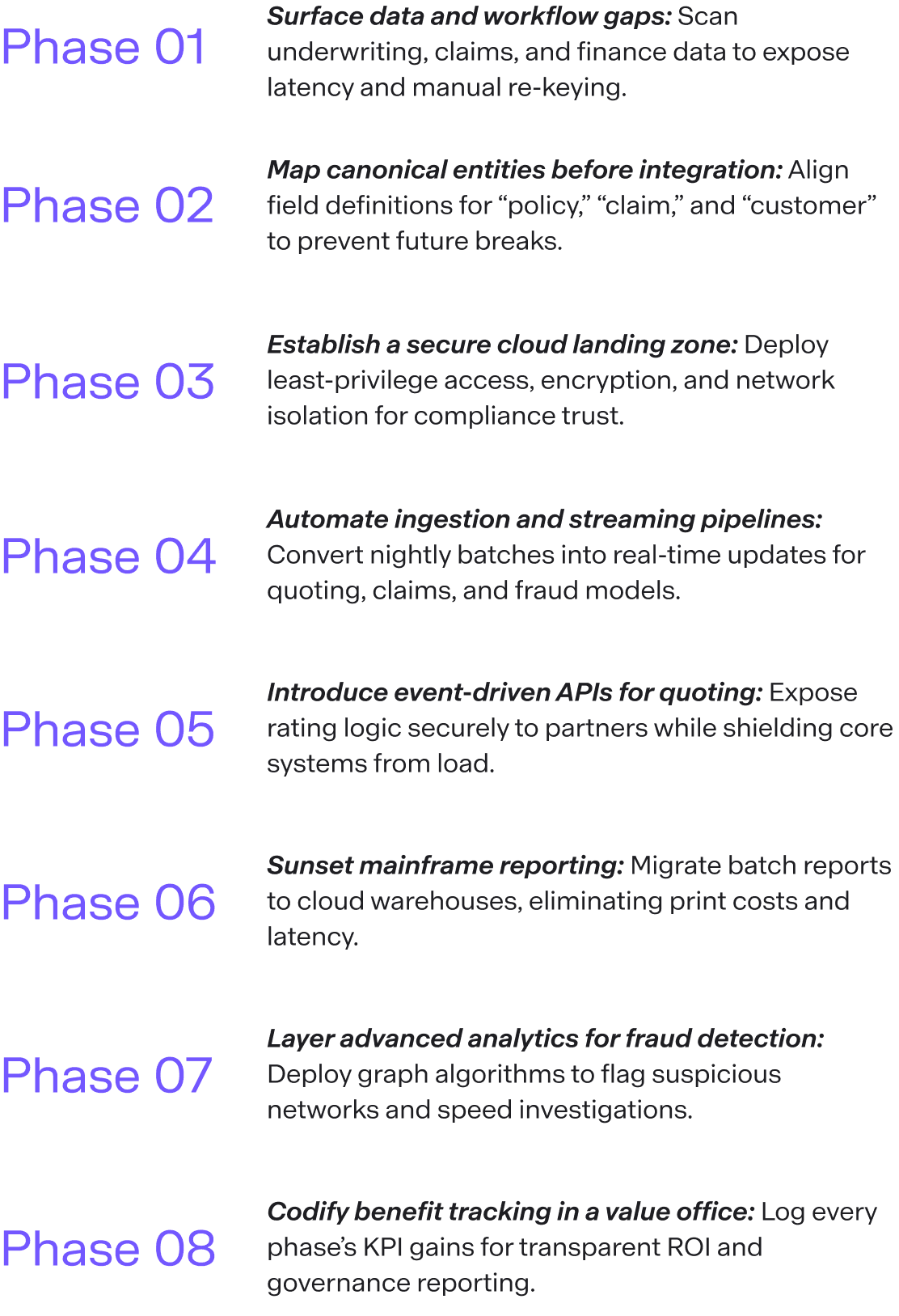
Each of the eight phases focuses on measurable, low-risk progress. Begin with a 30-day data scan to reveal latency and manual gaps. Align entity definitions before integration to prevent rework. Secure cloud landing zones and automate streaming pipelines to deliver real-time data. Event-driven APIs speed quoting, and decommissioned mainframes release capital. With each iteration, controls tighten, and compliance confidence rises.
What results to expect
Expect shorter claims cycles, faster quote responses, and visible fraud detection gains. Manual work falls by over half as data becomes traceable end-to-end. Regulators gain instant audit trails, and finance sees reduced reserve pressure. The outcome is a lean, transparent data estate that turns compliance from burden to competitive strength—laying the groundwork for AI-driven pricing and straight-through processing.
*based on external research sources cited within.
Access the playbook CIOs use to modernize insurance data
Need an executive summary? View our roadmap for data modernization in insurance.
FAQs
How do I modernize legacy insurance data without starting over?
What data KPIs matter most when measuring modernization success?
Where should I begin if my systems are fragmented across departments?
How do I prove modernization ROI to my executive team?
What’s the biggest modernization risk for insurance CIOs?








Take the brighter path to software development.