FitGMR Turns Everyday Wellness Data into a Personal AI Coach with Claude
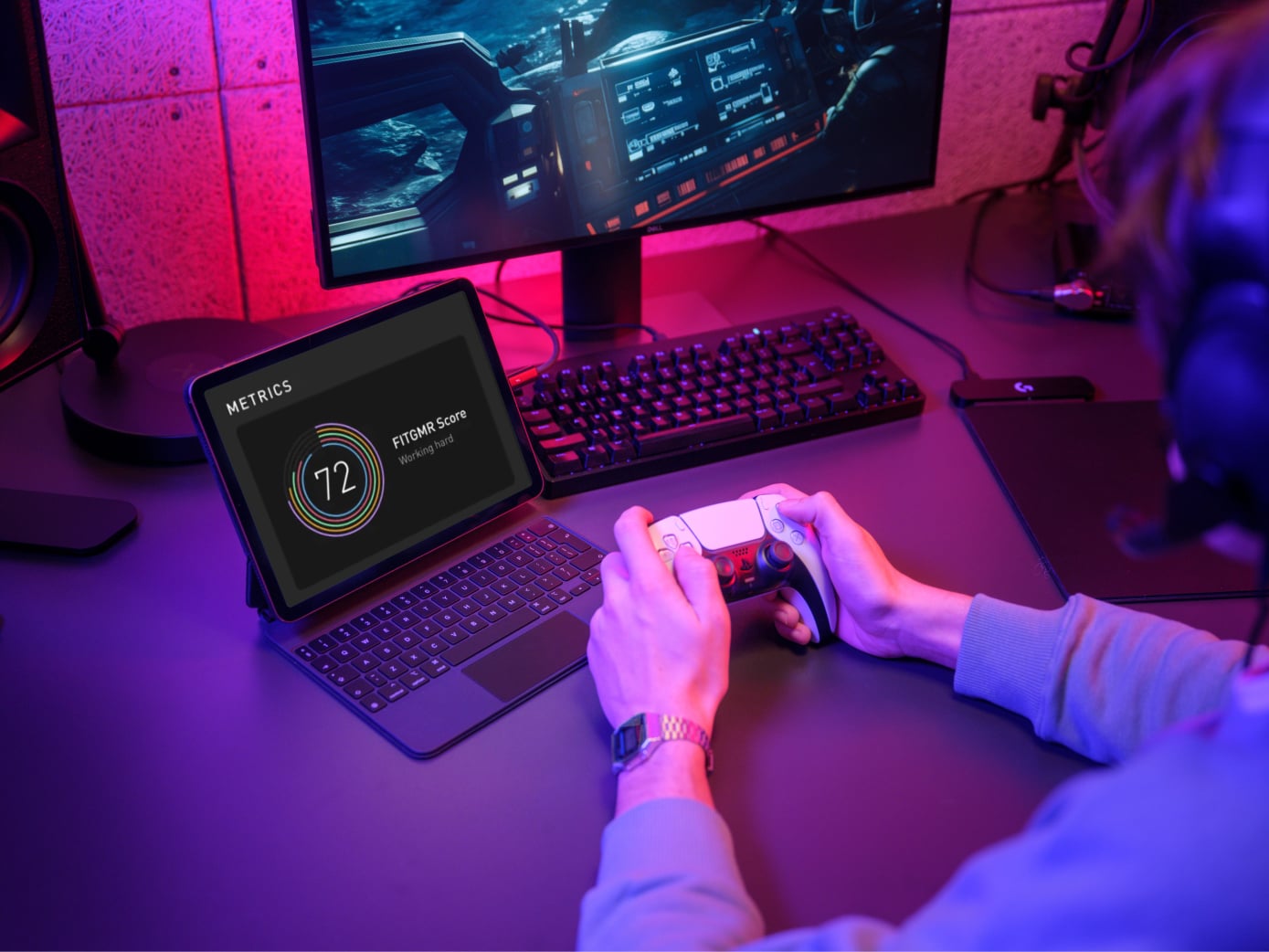
FitGMR turned the wellness data its users already log into a personal AI coach with Claude, reaching production on iOS and Android two weeks after the brief.
About
FitGMR helps esports athletes and gamers build healthier habits. Its mobile app is organized around five pillars of health: sleep, nutrition, physical maintenance, mental conditioning, and lifestyle. Users log their habits manually or sync them from their wearables, and a library of roughly 300 educational videos from FitGMR's experts teaches them what to do with that information. Three global eSports governing bodies have selected FitGMR as their official health partner.
Lumenalta®has been FitGMR's product engineering partner for several years, building its mobile apps, web platform, and coaching dashboard. FitGMR's founder and COO, Kristin Anderson, came to the team with a new goal: turn the data users were already logging into a coach that could tell each of them what to do next.
2 weeks
from brief to Claude running in production on iOS and Android
300
FitGMR videos (50+ hours) grounding every recommendation
4
Claude-powered app releases in under two months
1
engineer delivered the full build, using Claude Code
Challenge
FitGMR's users were generating rich data every day: sleep quality and disturbances, meals, water, coffee and sugar intake, workouts, breathwork, time outdoors. But data on its own doesn't change behavior. A user whose sleep had been slipping all week had to notice the pattern, guess at the cause, and then go looking for the right video.
FitGMR’s brief asked for an AI coach that would:
- Analyze each user's historical habit data to identify trends, such as declining sleep quality over the past week.
- Pinpoint likely causes using correlated data, such as high caffeine or sugar intake, or screen time before bed.
- Deliver targeted recommendations, including specific videos from FitGMR's library.
- Provide ongoing, proactive guidance to help users sustain healthy habits.
Two things made this harder than it sounds.
Capacity. The FitGMR engagement had moved from a larger team to a single Lumenalta®engineer, Asiri Indatissa, who was also responsible for keeping the existing product shipping.
Credibility. FitGMR's value is trusted, expert guidance. Generic AI wellness tips would undercut that. The coach needed to reason over each user's own data and speak from FitGMR's own content, not from general knowledge.
The Solution
Lumenalta®built the coach in three phases: get real value into users' hands quickly, then deepen what the model knows.
Phase 1: Claude in production
Lumenalta®integrated the Claude API directly into FitGMR's backend. Claude reads a user's logged data across all five pillars, identifies trends, reasons about likely causes from correlated signals, and returns a personalized wellness summary with targeted recommendations. The team then enriched the prompt with meal names, calorie data, and profile information so Claude's reasoning reflected each user's full context.
Consent by design
The next release added a disclaimer and an explicit user consent step before anyone uses FIT AI. For a product that handles personal health and lifestyle data, that gate was part of the rollout, not an afterthought.
Phase 2: Grounding the model in FitGMR's own expertise
FitGMR wanted the coach to draw on what they already know. Lumenalta®transcribed more than 50 hours of FitGMR's video library, converted the transcripts to vector embeddings, and stored them in PostgreSQL with pgvector. FitGMR's expert content became a searchable knowledge base.
Phase 3: Retrieval-augmented recommendations
A new service turns each user's wellness data into a natural-language query, retrieves the most relevant FitGMR videos through similarity search, and passes them to Claude alongside the user's data. Claude then produces a recommendation that explains what is happening in the user's habits and points them to the specific FitGMR videos that address it.
Claude Code as the build partner
Lumenalta®used Claude Code as the primary development tool throughout the engagement. Working solo, Indatissa shipped six mobile releases in November alone while building FIT AI and maintaining the rest of the product. "I'm the only one working here, so Claude Code really helps speed up the process. I can make decisions fast and discuss them directly with the client. My output has sped up a lot."
— Asiri Indatissa, Full Stack Developer, Lumenalta®
Why ground the model instead of prompting harder?
Phase 1 showed Claude could reason over FitGMR's data from the first release. The question was what it should draw on when it made a recommendation.
A general-purpose answer about sleep hygiene is available anywhere. FitGMR's differentiation is its own experts and its own curriculum. Retrieval puts that curriculum in front of Claude for every user, every time, so the coach recommends what FitGMR would recommend. And as FitGMR publishes new videos, they can be added to the knowledge base without retraining anything.
The principle behind the build: an AI coach should know what your experts know, not just what the internet knows.
The Results
From brief to production in two weeks. FitGMR users on iOS and Android had a Claude-powered coach within two weeks of Kristin's brief.
Advice became FitGMR's advice. Recommendations moved from generalized guidance to guidance grounded in FitGMR's own library of roughly 300 videos, pointing each user to the specific content that fits their data.
One engineer, four AI releases. Claude-powered features shipped across four production releases in under two months, delivered by a single engineer working with Claude Code.
Responsible from the first week. Explicit consent and a clear disclaimer shipped within six days of launch.
What changed
FitGMR's app used to record habits. Now it coaches.
The shift was not simply adding an AI feature. It was changing what the product does with the data users give it: from a log they have to interpret themselves, to guidance that explains the pattern, names a likely cause, and hands them the right expert content to act on.
For a small team, the path mattered as much as the outcome. Shipping Claude into production first created value in two weeks. Grounding it in FitGMR's own library then made that value distinctly FitGMR's.
The outcome for FitGMR: more than 1,000 users accessed the Claude-powered coach on day one of the Fit AI app launch.
The data came from users. The expertise came from FitGMR. Claude connected the two.
The data came from users. The expertise came from FitGMR. Claude connected the two.